
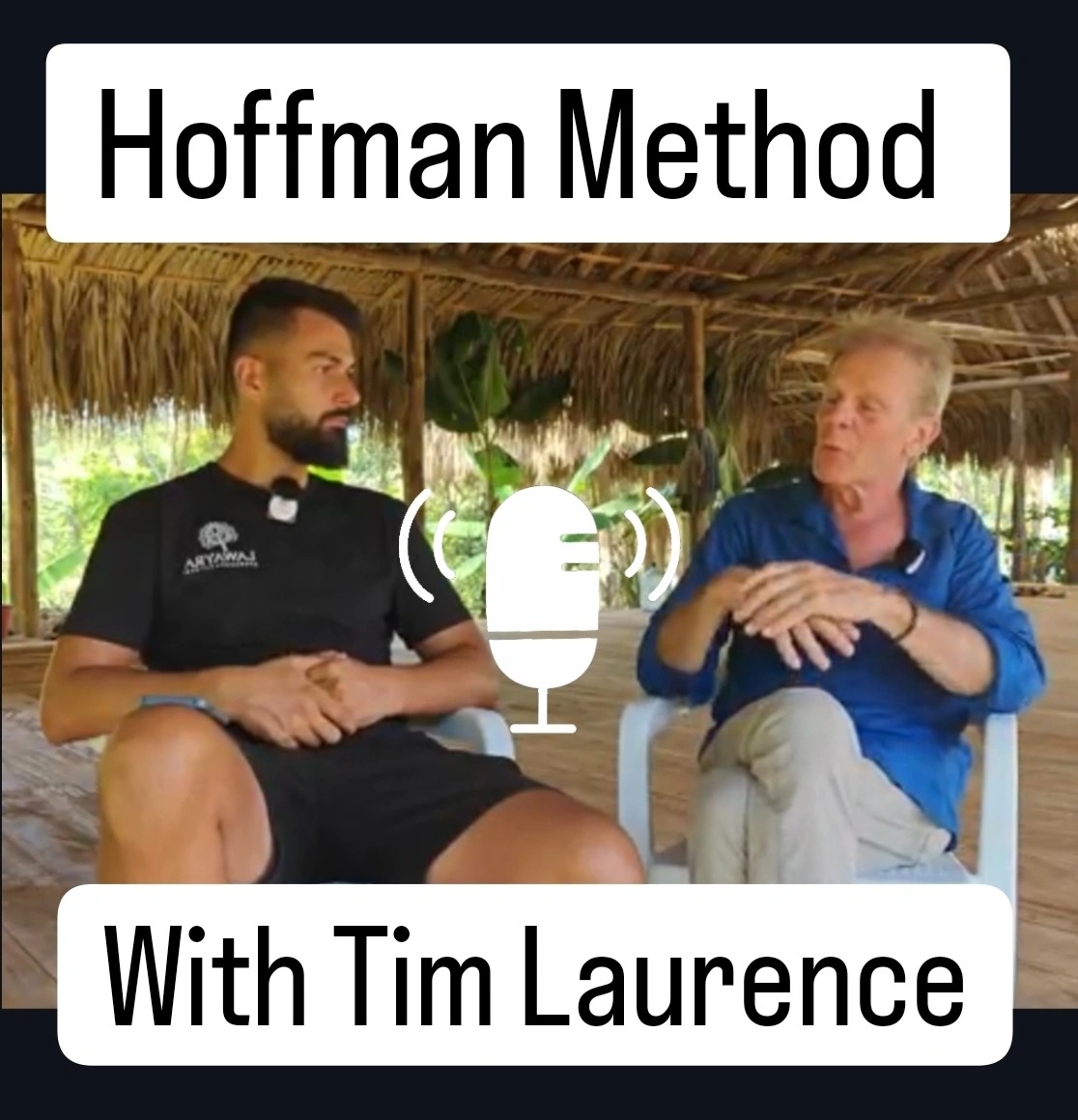
Healing work comes in many forms — talk therapy, meditation, retreats, plant medicine, somatic practices. One method that continues to gain attention for its depth and transformation is the Hoffman Process. In a thoughtful conversation with host Sam Believ, instructor Tim Laurence explains what the Hoffman Process is, how it works, and why it can be such a powerful tool for emotional clarity and inner change.
The conversation isn’t about hype or quick fixes. It’s about understanding deep emotional patterns, relational imprinting, and how adults can liberate themselves from old inner scripts that were written long ago.
The Core Question: What Is the Hoffman Process?
At its essence, the Hoffman Process is an immersive, week-long emotional and psychological retreat designed to identify and transform negative patterns that originate from early life conditioning. These patterns — beliefs, emotional reactions and behavioral responses — often operate below conscious awareness, shaping how people respond to themselves, others, and life’s challenges.
According to Tim, most adults carry emotional wounds from childhood that influence their adult relationships, their self-esteem, and even their physical wellbeing. These wounds often express as “negative patterns” — ways of thinking and reacting that were once survival strategies but now limit growth, intimacy, and emotional freedom.
The Hoffman Process is a space to surface those patterns, understand their origin, feel their impact, and — through structured work — rewrite the internal script.
The Week That Changes the “Automatic Pilot”
Unlike weekly therapy sessions or occasional workshops, the Hoffman Process is immersive: participants spend an intense week fully committed to inner work. Tim explains that this concentrated approach allows something deep to open up — a shift that would take months or years in other formats.
Participants begin by mapping their negative patterns. These are usually unconscious survival responses learned in childhood. For example, a person might believe on some deep level: I am not worthy, I must control others to feel safe, I must avoid conflict at all costs, or If I show vulnerability, I will be abandoned. These beliefs no longer serve the adult — but they still live in old emotional wiring.
The structure of the week combines introspection, guided reflection, emotional expression, and practices designed to bring the unconscious into awareness. This includes reconciling inner child emotions with current self-understanding, recognizing where reactions are rooted in past scripts, and creating new internal narratives.
Beyond Talk Therapy: The Embodied Shift
One of the key points Tim makes is that the Hoffman Process isn’t simply cognitive. It doesn’t just teach people to think differently. It helps participants feel differently.
Much of the work happens in the body — through emotional release, somatic awareness, and identifying how old patterns show up physically. Some people realize they hold tension in the throat when afraid to speak up, or clench the jaw when suppressing anger, or tighten the stomach when suppressing sadness.
By engaging with both emotion and body, the process allows people to download old patterns and upload new ways of being. It’s a kind of emotional reboot — but with awareness.
The Role of Ownership and Responsibility
A recurring theme in the conversation is ownership. Tim explains that many people move through life operating on “auto-pilot,” reacting without understanding why. They might pattern match situations without conscious choice. Part of the Hoffman Process is helping participants see how their defenses and reactions were learned adaptations — not truths about reality.
Once this becomes conscious, a person gains choice. Instead of unwittingly replicating old patterns, they can decide how they want to respond. This doesn’t eliminate difficult emotions — but it transforms the relationship to them.
Integration: The Real Work Begins After the Week
Although the Hoffman Process is a powerful week of concentrated work, Tim is clear that the real transformation happens afterward. Insight without integration is unstable. Participants are given tools, practices, and reflections to carry forward.
Integration includes ongoing self-reflection, noticing triggers in real time, making new choices based on consciousness rather than habit, and nurturing emotional presence. For many, the support doesn’t end after the week — it is the beginning of a new way of living.
Who Benefits From This Work?
The Hoffman Process isn’t only for people in crisis. It’s for anyone who wants to get free of emotional reactivity, relational patterns, and unconscious life scripts. Some attend after years of therapy without breakthrough; others arrive curious about deep self-work. Tim emphasizes that willingness and openness matter: the process is deep, sometimes painful, often emotional — but rarely superficial.
Participants range from professionals feeling burnout, people stuck in repetitive relational cycles, those who want emotional maturity, or individuals who recognize themselves in loops they don’t understand.
What Makes It Different From Other Modalities?
Several unique aspects set the Hoffman Process apart:
-
Immersion: A dedicated week allows focus without daily life distractions.
-
Pattern Identification: It focuses not just on symptoms, but the origin of patterns.
-
Emotion + Body: It engages cognitive insight and emotional somatic response.
-
Skill Building: Participants learn how to observe triggers and choose responses.
-
Integration Tools: Take-home practices support post-retreat life.
Where talk therapy may take months to scratch the surface, the immersive nature creates a different kind of depth. It’s not about escaping pain, but illuminating its route — then walking beyond it.
A New Relationship to Self
By the end of the conversation, a central lesson emerges: most emotional suffering is not random — it’s patterned. Old survival strategies once served a purpose but can become outdated in adult life. When those patterns run in the background, life feels reactive: habitual anger, avoidance, self-criticism, anxiety, defensiveness.
The Hoffman Process helps people see those patterns, feel where they reside, and choose how to change them. It’s not a quick patch — it’s foundational work: structural, psychological, embodied.
For many participants, the shift isn’t just less reactivity — it’s more presence, more calm, more clarity, more freedom. The patterns that once ran in the background no longer hijack emotional life.
Final Reflection: A Path to Emotional Freedom
Emotional healing isn’t about perfection. It’s about awareness — becoming conscious of what was once unconscious, reclaiming choice, and learning to respond from a place of presence rather than history.
The Hoffman Process doesn’t promise a life without difficulty — but it does offer a new relationship to difficulty. Instead of defense and avoidance, it teaches presence and choice. Instead of reactivity, it teaches clarity. Instead of old inner scripts, it teaches new narratives rooted in awareness.
In the end, the work can lead to a profound and grounded shift: from living by pattern to living by presence. And for anyone committed to deep inner growth, that may be the most meaningful change of all.
Based on the Ayahuasca Podcast episode “What is Hoffman process” with Sam Believ and Tim Laurence.

Sam Believ is the founder and CEO of LaWayra Ayahuasca Retreat, the best-rated Ayahuasca retreat in South America, with over 520 five-star Google reviews and an overall rating of 5 stars. After his life was transformed by Ayahuasca, he dedicated himself to spreading awareness about this ancestral medicine to help address the mental health crisis. Sam is committed to making Ayahuasca retreats affordable, accessible, and authentic, with a focus on care, integration, and the involvement of indigenous shamans. He is also the host of the Ayahuasca Podcast.